






Good sound processor care takes only a few minutes a day, and it pays off: clearer sound, fewer surprises and parts that last longer. This routine works for most cochlear implant processors, including Cochlear Nucleus, Advanced Bionics and MED-EL models, for adults and children alike. Always follow the care instructions in your own processor’s user guide first.
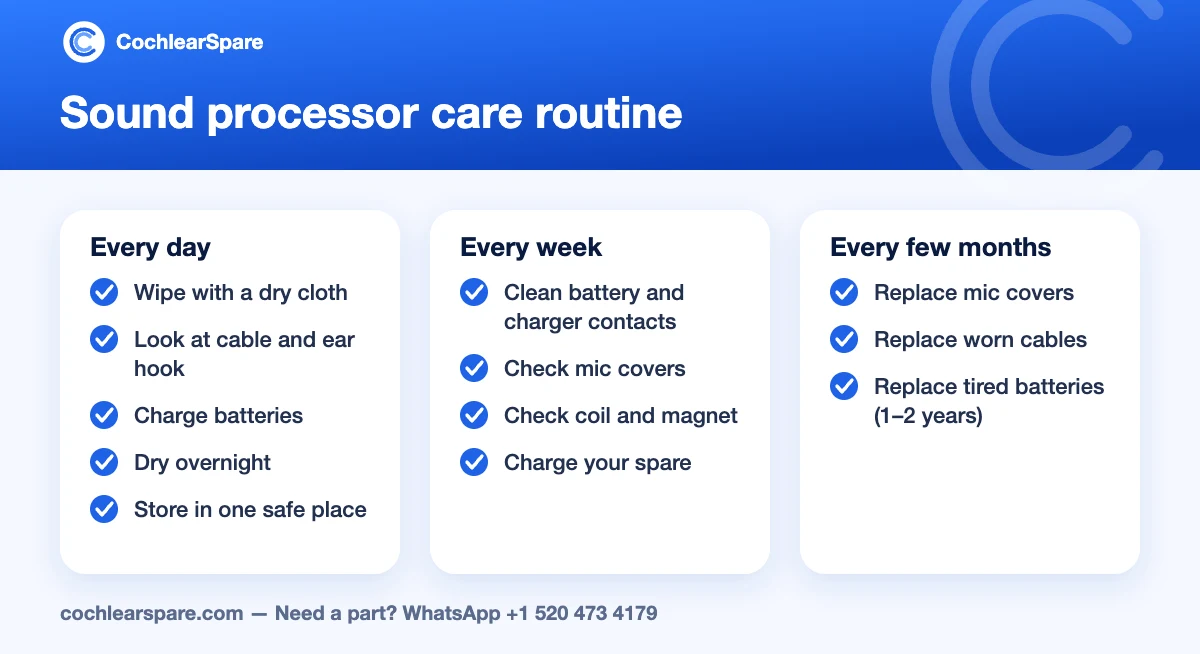
Every day: the two-minute routine
- Wipe. At the end of the day, wipe the processor, coil and cable with a soft, dry cloth. Do not use water, alcohol or cleaning sprays.
- Look. Check the cable for kinks or cracks near the plugs, and the ear hook for cracks.
- Charge. Put rechargeable batteries on the charger and check the lights come on.
- Dry. Place the processor in a drying box overnight, especially if you sweat or live somewhere humid.
- Store. Keep the processor in the same safe place every night, away from pets and young children.
Every week: a closer look
- Wipe the battery contacts and the charger contacts with a dry cloth or cotton bud.
- Look at the microphone covers. If they look dirty, or sound seems dull, change them.
- Check that the coil magnet holds well on the head and the coil is not cracked.
- Make sure your spare battery is charged and your spare cable is where it should be.
Every few months: replace the small parts
| Part | Typical replacement | What to watch for |
|---|---|---|
| Microphone covers | Every few months, sooner if dusty or sweaty | Dull or muffled sound |
| Coil cable | When it shows wear or cuts out | Sound drops when you move your head |
| Rechargeable battery | After one to two years of daily use, or when it no longer lasts the day | Shorter days, early low-battery warnings |
| Ear hook | When cracked or loose | Processor slips off the ear |
Replacement intervals depend on how you use your processor and your environment. Your clinic can advise on your own schedule.
Things that damage a processor
- Heat: hot cars, radiators, sunny windowsills and hair dryers.
- Moisture: sweat, rain, steam from showers and humid bathrooms.
- Hair products: hairspray, gel and sun cream can block microphones. Put them on before the processor.
- Pulling the cable: always unplug by the plug, never by the wire.
- Drops: a clip or retention cord helps, especially for children.
Sound processor care for children
Children are hard on processors, so a few extra habits help. Make the evening routine part of bedtime, so it becomes automatic. Let older children do the wiping and charging themselves, with a quick check from you. Keep a spare battery and cable at school, and use a headband or clip during sport. Our spare kit guide for parents explains what to keep where.
When to call your clinic
Simple care fixes most everyday problems, but contact your clinic or audiologist if:
- Sound is still poor after you change the battery, cable and microphone covers.
- The processor shows error lights or warnings you do not recognise.
- There is redness, soreness or swelling under the coil.
- The processor has been dropped in water or badly knocked and does not work normally.
Sound processor care checklist
- Daily: wipe, look, charge, dry, store
- Weekly: clean contacts, check microphone covers, coil and spares
- Every few months: replace covers and worn cables
- Every one to two years: replace tired batteries
When a part needs replacing, we stock batteries, chargers, cables, microphone covers and ear hooks for Cochlear, Advanced Bionics and MED-EL processors, including Nucleus 7 microphone covers, Nucleus 6 cables, Naída CI cables and a processor dryer.
Not sure which part fits? Send a photo of your processor on WhatsApp (+1 520 473 4179) and we will confirm the right part before you pay.
FAQ
Can I clean my processor with water or alcohol wipes?
No. Use a soft, dry cloth unless your user guide says otherwise. Liquids can damage the electronics and microphones.
Do I really need a drying box?
It is strongly recommended if you sweat, live in a humid climate or have a child who plays outdoors. Moisture is a common cause of problems.
How often should I change microphone covers?
Every few months for most people, and sooner if they look dirty or sound becomes dull.
How long does a processor battery last?
Most rechargeable batteries need replacing after one to two years of daily use, or when they no longer last a full day.

Travelling with a Cochlear Implant: Packing List and Airport Tips
Cochlear Implant Spare Kit for Children: What to Keep at Home, School and on the Go
Back to School with a Cochlear Implant: A Checklist for Parents

Cochlear Nucleus 7 Spare Parts Guide (CP1000): Care, Fixes and Where to Buy
Cochlear Nucleus 6 Spare Parts Guide (CP910 & CP920): Care, Fixes and Where to Buy

Cochlear Nucleus 5 Spare Parts Guide (CP810 & CP802): Care, Fixes and Where to Buy

Naída CI Replacement Parts Guide: Q90, Q70, Q30 & Marvel

Cochlear Implant Cable Replacement: 7 Signs Your Cable Needs Replacing
How Long Do Cochlear Implant Batteries Last? Replacement Guide

AB Harmony Replacement Parts Guide: Batteries, Headpieces & Accessories